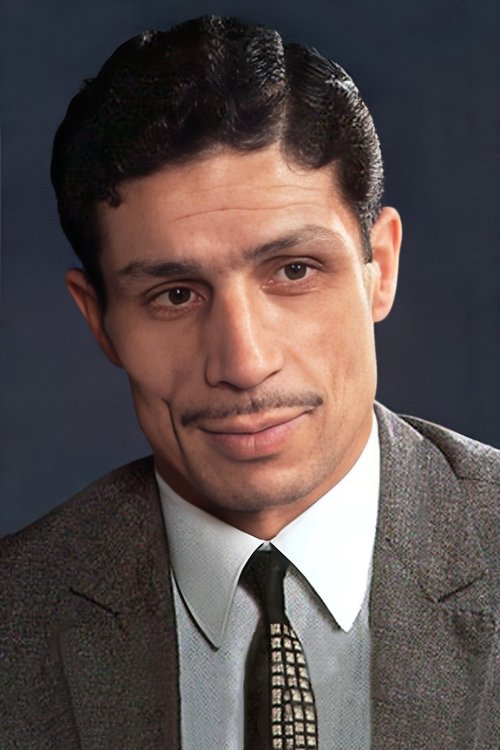
Abderrahmane Amrani, known by the stage name Dahmane el Harrachi (Arabic: دحمان الحراشي), is an Algerian musician, pianist, singer-songwriter, of chaâbi music. Born July 7, 1926 in El Biar, Algiers, and died August 31, 1980 in Aïn Benian in the western suburbs of Algiers. He is considered a great master (sheikh) of chaâbi. His son, Kamel El Harrachi, also a chaâbi singer-songwriter, continues to bring his repertoire to life. An Algerian originally from Djellal in the wilaya of Khenchela, his father settled in Algiers in 1920 and became muezzin at the Great Mosque. After the birth of Dahmane (short for Abderrahmane), the family moved to Belcourt, rue Marey, then settled permanently in El-Harrach. The youngest of a family of eleven children, it is from the El Harrach district that Dahmane gets his nickname El Harrachi. He began playing the banjo very early, influenced by the Chaâbi singer Khelifa Belkacem (died in 1951). At 16, he performed the latter's songs. With a school certificate in hand, he became a shoemaker and then a tram conductor on the line linking Maison Carrée to Bab El Oued. He is already a banjo virtuoso and many chaâbi singers from the 1940s offer his services such as Hadj Menouar, Cheïkh Bourahla, Cheïkh Larbi el Annabi, Abdelkader Ouchala and especially Cheikh El Hasnaoui with whom he performs for the first time at the Café des Artistes, rue de Charonne in Paris in 1952. In 1949, he went to France, and for years he performed in North African cafés in cities across France. He performs the Algiers chaâbi repertoire accompanied by a banjo. He then discovered the gap between the reality of immigration and the North African repertoire of melhoun written between the 16th and 19th centuries. Author-composer, he adapts chaâbi in his own way by creating a new musical and poetic language by singing the experiences of his contemporaries. He recorded his first record with Pathé Marconi in 1956, during the war of independence, the song bears the title Behdja Bidha Ma T'houl (White Algiers will never lose its shine) and also composed the song Kifech Nennsa Biled El Khir (How can I forget the land of plenty). An original artist, he modernizes the chaâbi and gives the banjo and the mandola a phrasing, harmony and accentuations that are his own and which distinguish him from other chaâbi singers. His repertoire consists of around 500 songs of which he is the author. He spent his entire artistic career in France and received recognition from his peers during the Maghreb Music Festival in the early 1970s in La Villette. Discovered late by the new generation in Algeria, he only officially performed in public in 1974 at the Atlas Hall in Algiers. On Algerian television, he left three recordings and played his own role as a chaâbi singer in a TV film entitled Saha Dahmane filmed just before his disappearance in a road accident on August 31, 1980 in Aïn Benian. One of his most famous songs Ya Rayah (O leaving), about emigration, departure, was a great success when it was released in France in 1973. Rachid Taha covered it in 1997. The original song made the around the world and was translated into several languages while keeping the same melody.