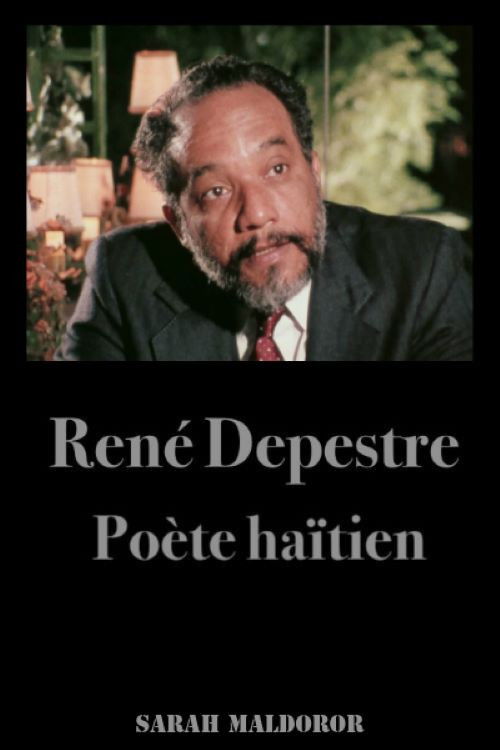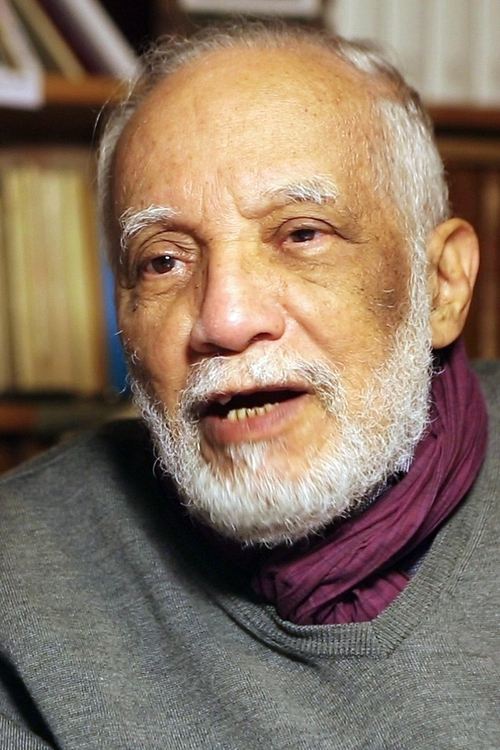
René Depestre (born 29 August 1926, Jacmel, Haiti) is a Haitian poet and former communist activist. He is considered to be one of the most prominent figures in Haitian literature. He lived in Cuba as an exile from the Duvalier regime for many years and was a founder of the Casa de las Américas publishing house. He is best known for his poetry. He did his primary studies with the Breton Brothers of Christian Instruction. His father died in 1936, and René Depestre left his mother, his two brothers and his two sisters to go live with his maternal grandmother. From 1940 to 1944, he completed his secondary studies at the Pétion college in Port-au-Prince. His birthplace is often evoked in his poetry and his novels, in particular Hadriana in All My Dreams (1988). Étincelles (Sparks), his first collection of poetry, appeared in 1945, prefaced by Edris Saint-Amand. He was only nineteen years old when the work was published. The poems were influenced by the marvelous realism of Alejo Carpentier, who planned a conference on this subject in Haiti in 1942. Depestre created a weekly magazine with three friends: Baker, Alexis, and Gérald Bloncourt: The Hive (1945–46). “One wanted to help the Haitians to become aware of their capacity to renew the historical foundations of their identity” (quote from Le métier à métisser). The Haitian government at the time seized the 1945 edition which was published in honor of André Breton, which led to the insurrection of 1946. Depestre met with all his Haitian intellectual contemporaries, including Jean Price-Mars, Léon Laleau, and René Bélance, who wrote the preface to his second collection, Gerbe de sang, in 1946. He also met with foreign intellectuals. He took part in and directed the revolutionary student movements of January 1946, which led to the overthrow of President Élie Lescot. The Army very quickly seized power, and Depestre was arrested and imprisoned before being exiled. He pursued his studies in letters and political science at the Sorbonne from 1946 - 1950. In Paris, he met French surrealist poets as well as foreign artists, and intellectuals of the négritude (Black) movement who coalesced around Alioune Diop and Présence Africaine. Depestre took an active part in the decolonization movements in France, and he was expelled from French territory. He left for Prague, from where he was driven out in 1952. He went to Cuba, invited by the writer Nicolás Guillén, where again he was stopped and expelled by the government of Fulgencio Batista. He was denied entry by France and Italy. He left for Austria, then Chile, Argentina and Brazil. He remained in Chile long enough to organize, with Pablo Neruda and Jorge Amado, the Continental Congress of Culture. ... Source: Article "René Depestre" from Wikipedia in English, licensed under CC-BY-SA 3.0.